Talking New York Real Estate – More Network Youtube Link
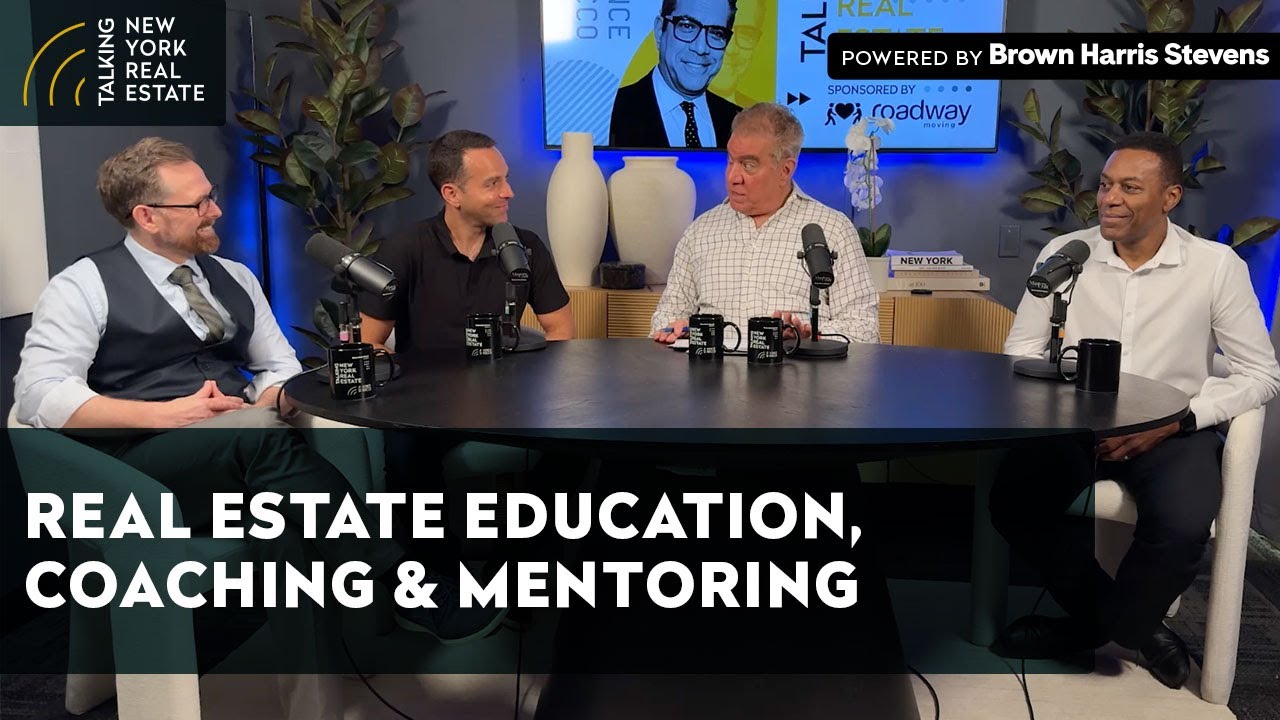
Marc Norman, Associate Dean at NYU’s Schack Institute of Real Estate, joined host Vince Roco on Talking New York Real Estate to make the case that succeeding in this city’s property market takes more than a licence – it takes the kind of formation that most agents never invest in. Alongside coaches Ari Harkov and Eric Glissone of Brown Harris Stevens, Norman offered a candid look at what NYU Schack provides, and why soft skills have become the real differentiator in the industry.
Norman opened with a brief history of the institution he leads. Founded in 1967 by Larry Silverstein, who remains chair at 94, Schack began as a continuing education programme before evolving into one of the country’s largest and oldest real estate schools, with around 400 students in the bachelor’s programme, 550 in the master’s, and approximately 1,500 in executive and continuing education. Norman emphasised the programme’s accessibility across career stages: “It’s a place where you can start and build your way up. You don’t need two master’s degrees before you get here.”
On the question of what students struggle with most after graduation, Norman was direct. “We can teach the hard skills. We can teach financial modelling, the zoning code, all that stuff. But I find more and more it’s the soft skills.” He pushed back on fears about AI displacement, arguing that the ability to negotiate, read a room, and conduct yourself in ways that close deals is considerably harder to replicate than financial modelling. To bridge that gap, Schack incorporates extracurricular experiences alongside classroom learning, including orientation sessions run by real estate attorney Matt Katsandorf, who tests students on observation and relationship-building from the moment they walk in the room.
For professionals already in the field, Norman pointed to Schack’s certificate programmes as a practical route back into education without the commitment of a full degree. Offerings span affordable housing, construction, real estate finance, and capital markets, with most completable in four to six classes. Norman noted that the affordable housing certificate, launched two years ago, has been taken up almost entirely by practitioners already working in the sector, reflecting how professionals use targeted programmes to fill gaps rather than start over. His overall pitch for the institution was characteristically practical: “Real estate gives you a leg up, even if you don’t ultimately go into the field. You’re learning negotiation, you’re learning how to run a business, you’re learning how a city works.”
Leave a Reply